There are plenty of businesses that can tell you where their products are made or what ingredients go into them. With Bellringer’s Preserves, however, ask about almost any jar and you’re likely to get a much longer story.
It might involve fruit gathered from a friend’s orchard in Worcestershire, quinces from the gardens of William Morris’s former home, a recipe traced back several centuries, a childhood influenced by Indian cooking or a great-grandfather whose pickle business disappeared during the economic turmoil of 1929.
And somewhere along the way, bells will probably enter the conversation too.
Bellringer’s Preserves is the work of Worcester-based Mark Regan, who personally sources, prepares, cooks, fills and labels every jar. What began as a longstanding interest in preserving developed into a business during lockdown, but its roots stretch back considerably further than that.
A Family Tradition Revived Nearly a Century Later
Preserving is woven into Mark’s family history.
His great-grandfather, Peter McQueeney, ran a pickle business in Sunderland during the early twentieth century. The business eventually failed in 1929 during the Great Crash, but stories about it continued to be passed through the family.
For Mark, those stories eventually became something more tangible.
His grandmother was one of Peter’s daughters and retained the broad Sunderland accent of her upbringing. Her younger sister Mary, lived long enough to become an unofficial member of Mark’s tasting panel, with samples of his preserves regularly sent north for approval.
In that sense, Bellringer’s Preserves represents the revival of a family tradition that disappeared almost a century ago.
There is another important culinary thread running through the family too. Mark’s mother was born in India, where her family had lived for generations, and Indian cooking consequently became part of his own childhood.
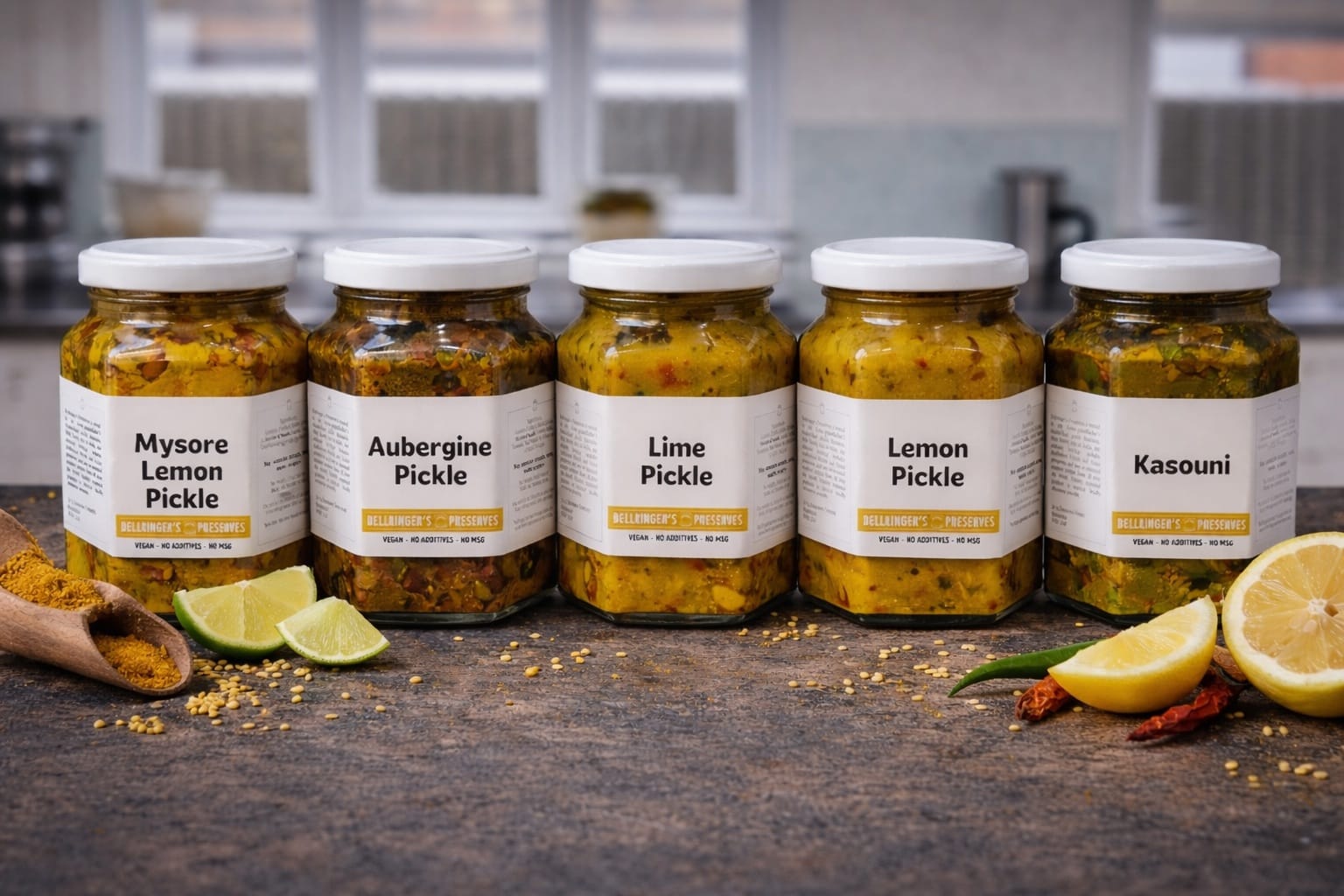
That influence still appears within the Bellringer’s range today, sitting alongside much more traditional British preserving methods. Mark’s own material describes the business as continuing the tradition of his great-grandfather while drawing on both old and new recipes and the Indian food he grew up with.
Country Cooking, Home-Grown Produce and Boiled Vinegar
Despite having spent significant periods of his life in London, Mark’s early relationship with food was rooted in the countryside.
He grew up beside a farm in Bedfordshire, where farmer’s wife Ethel Miller taught him a great deal about country cooking. He continued cooking throughout his life and had already been making preserves, particularly marmalade, for years before Bellringer’s became a business.
Lockdown provided the opportunity to take the idea more seriously.
His family encouraged him, as did the Boffy markets where he began selling his preserves, although his three children had arguably already made their contribution to product development by spending much of primary school wearing clothes carrying the unmistakable aroma of boiled vinegar.
They apparently still hold a grudge.
These days, however, they are more than happy to sell the finished preserves to friends and colleagues.
Made by the Person Serving You
One of the things that distinguishes Bellringer’s Preserves is how directly involved Mark remains in every part of the process.
There isn’t a production team hidden elsewhere or a manufacturer making jars to his specification. Mark sources the ingredients, prepares the fruit and vegetables, cooks the recipes, fills the jars, adds the lids and labels and then takes them to markets or delivers them to stockists.
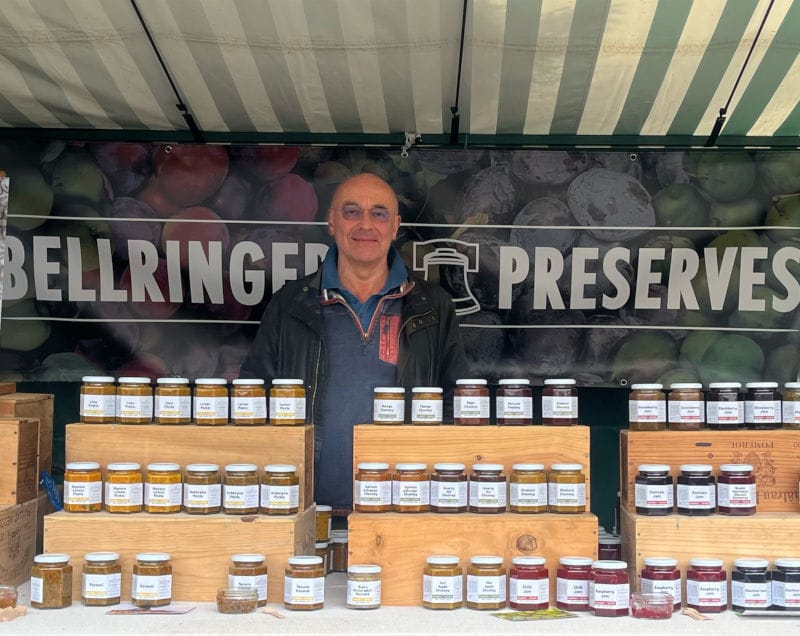
That is why one of his market signs carries the very simple message: “Made by the person serving you.”
It sums up the business rather well.
The same sign highlights the principles behind the range: small batches, traditional and unusual family recipes, locally sourced ingredients, no artificial flavourings, colours or MSG and flavours you won’t typically find in supermarkets.
Customers can ask where the fruit came from, what inspired a particular preserve or how it was made, and there’s every chance Mark will be able to tell them the orchard, garden or recipe behind it.
From Worcestershire Gardens to the Jar
Local sourcing is an important part of Bellringer’s Preserves, but not simply because it makes a good marketing message.
Much of the fruit and vegetables comes from the gardens, allotments and orchards of friends across Worcestershire and the surrounding area. Many of those friends happen to be fellow bellringers.
At Severn Stoke, for example, John Henderson supplies apples and pears from his orchard, while other local growers provide whatever seasonal produce happens to be available.
Dave Cropp supplies damsons and Shepherd’s Bullaces (like a wild greengage) from his Martley orchard.
Some of it is gloriously imperfect fruit that might otherwise never be used commercially.
For ingredients that cannot realistically be grown locally, such as citrus fruit, Mark uses suppliers including Three Counties Farm Shop and occasionally Riverford. Three Counties Farm Shop also stocks Bellringer’s Preserves, creating the sort of circular local relationship that small food businesses are particularly good at building.
Spices, sugar and other ingredients are sourced from ethical suppliers or directly from manufacturers wherever possible.
The phrase farm to fork is used rather liberally these days, but in this case there may genuinely be only a few pairs of hands between the orchard and the finished jar.
Traditional Marmalade Meets the Unexpected
The Bellringer’s range covers jams, marmalades, chutneys, pickles, mustards and sauces, but Mark is equally happy producing something familiar or heading into the archives in search of something people may never have tasted before.
His influences include food writers and cooks such as Diana Henry,Kylee Newton, Meera Sodha and Marguerite Patten, creating an interesting meeting point between British preserving traditions and flavours from elsewhere.
Seasonality plays a big role too. Quinces, medlars, apples, pears and other locally available fruits often determine what appears next.
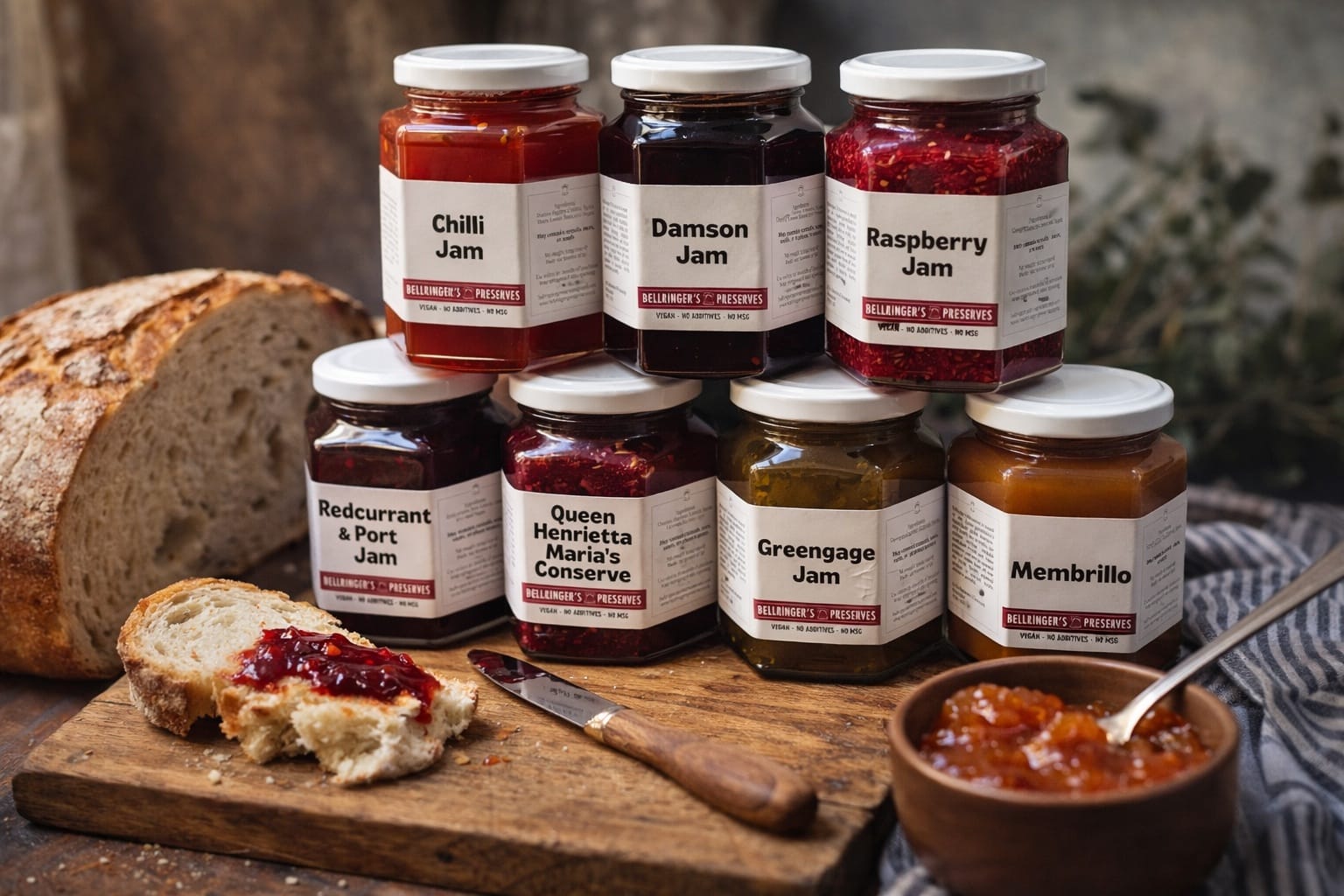
Among the more unusual creations is Queen Henrietta Maria’s Conserve, inspired by a seventeenth-century recipe with a Worcestershire connection.
Henrietta Maria, wife of Charles I, brought considerable French culinary influence to the English court through a household that included French chefs and pâtissiers. A collection of recipes associated with her appeared in The Queen’s Closet Opened, published in 1655, providing the historical inspiration behind Mark’s conserve.
It is exactly the sort of rabbit hole Mark enjoys disappearing down: food history, local connections and a recipe that can be brought back to life several centuries later.
The Approved “Quince Thief” of Kelmscott Manor
Perhaps one of the best Bellringer’s stories concerns Kelmscott Manor, the Oxfordshire former home of William Morris.
Mark uses quinces and medlars from the gardens there to create preserves sold through the Manor shop.
His relationship with the fruit has also earned him the affectionate title of “the quince thief”.
The name arose after a guide spotted Mark among the trees and understandably wondered why someone appeared to be helping himself to the quinces. He subsequently had to explain that he was, in fact, authorised to be there.
An approved quince thief, if you like.
The relationship began when Mark saw the heavily laden quince trees at Kelmscott and thought the fruit would make excellent membrillo. Kelmscott’s own information subsequently described how preserves made from its fruit would form part of the range, with ingredients sourced from friends’ gardens, orchards and allotments wherever possible.
There is something particularly fitting about taking fruit from the gardens surrounding William Morris’s former home, preserving it by hand and returning the finished product to the shop for visitors to take home.
Marmalade for Paddington
Then there is perhaps the most charming product pairing in Worcester.
Bygones, Gabrielle Bullock’s antique shop close to Worcester Cathedral, stocks Bellringer’s marmalade alongside its Paddington and Aunt Lucy bears.
Every Paddington or Aunt Lucy sold by Gabrielle goes home accompanied by a jar of Mark’s marmalade.
For someone who happens to love Paddington, it’s difficult to imagine a more appropriate endorsement.
The Paddington card produced by Bellringer’s also tells customers about Mark’s family preserving history, the Indian influence on his cooking and the local sourcing behind the range.
From Holiday Cottages to Farmers’ Markets
Bellringer’s Preserves has gradually found its way into a varied collection of outlets.
At Hop Pickers Rural Retreats, guests receive Mark’s jams or marmalade, with some of the fruit coming from the retreat’s own orchard.
Other stockists and outlets include Peter Cook, the Malvern Bakehouse, Worcester Guildhall Tourist Information Centre, Tewkesbury Tourist Information Centre and Three Counties Farm Shop, while Mark regularly attends markets including Great Malvern and Edgbaston Village, and the Madresfield Fete.
Online sales have become another important part of the business – something Mark admits has surprised him slightly given that glass jars filled with preserves are neither the lightest nor cheapest things to put in the post.
But perhaps that also says something about the appeal.
Customers aren’t necessarily buying just another jar of chutney.
Why Story Matters
Bellringer’s Preserves is not trying to reinvent jam.
Mark is quite open about the fact that plenty of people make excellent preserves. What makes his own range interesting is the combination of local ingredients, handmade production, small batches and recipes that are often a little different.
But arguably the real point of difference is knowing where everything came from.
The apple might have grown in a friend’s Worcestershire orchard. The quince might have come from Kelmscott Manor. A recipe might have been inspired by seventeenth-century food history, Mark’s great-grandfather or memories of Indian cooking from his childhood.
And the person explaining all of that from behind the farmers’ market stall is also the person who cooked it.
For hospitality businesses, farm shops, independent retailers and visitor attractions increasingly interested in provenance, that gives Bellringer’s something particularly valuable: a local product with a genuine story attached to it.
And Why Bellringer’s?
The other half of the name needs some explanation.
Mark has been ringing bells since his teenage years and has spent much of his life involved with historic churches and bell projects.
His bellringing life has included St Paul’s Cathedral, almost two decades as Ringing Master at Worcester Cathedral, and a close connection with St Mary-le-Bow in the City of London, home of the famous Bow Bells. He was married there and his three children were baptised there too. Bellringer’s own background material also records his long involvement in the conservation and care of churches and his decades of voluntary work supporting the future of bellringing.
So Bellringer’s Preserves was never a branding exercise dreamt up around a table.
It is simply a description of the person making them.
Bellringing also feeds into the community surrounding the business. Some of the people supplying fruit are fellow ringers, while farmers’ markets have created another network of growers, makers, customers and friends.
Mark says those conversations are one of the parts of the business he enjoys most – talking about what people grow, cook and eat, recommending cheeses or breads to accompany different preserves and hearing how customers have used the jars they previously bought.
A Local Brand With No Need to Become a Factory
Mark’s ambitions for Bellringer’s Preserves are refreshingly straightforward.
He would like it to become an understated, well-known and successful local brand – something recognised across Worcestershire and the surrounding counties for being genuinely handmade, local and a little different.
There appears to be no grand plan to turn it into a factory-produced range bearing his name while somebody else does the cooking.
In fact, that would rather defeat the point.
Bellringer’s is interesting precisely because it remains so closely connected to the person behind it: his family, his food memories, the orchards and gardens around him, the farmers’ market community, the historic recipes he researches and, inevitably, the bells.
Every jar really does have a story.
And after all these years, perhaps Mark’s children might eventually forgive him for making their school clothes smell of boiled vinegar.
Bellringer’s Preserves is part of the Pershore Patty Recommended Suppliers directory, connecting hospitality businesses with local producers, wholesalers and specialist service providers across Worcestershire and beyond.
You can discover other trusted suppliers in the Recommended Suppliers Directory.
Get in Touch with Bellringer’s Preserves
Website: www.bellringerspreserves.co.uk
Email: bellringerspreserves@gmail.com
Based in: Worcester, Worcestershire
This article is part of the Pershore Patty Supplier Spotlight series, highlighting local producers, wholesalers and service providers working with hospitality businesses across the Three Counties and beyond. To be featured, or to connect with trusted trade suppliers, contact victoria@pershorepatty.com.