
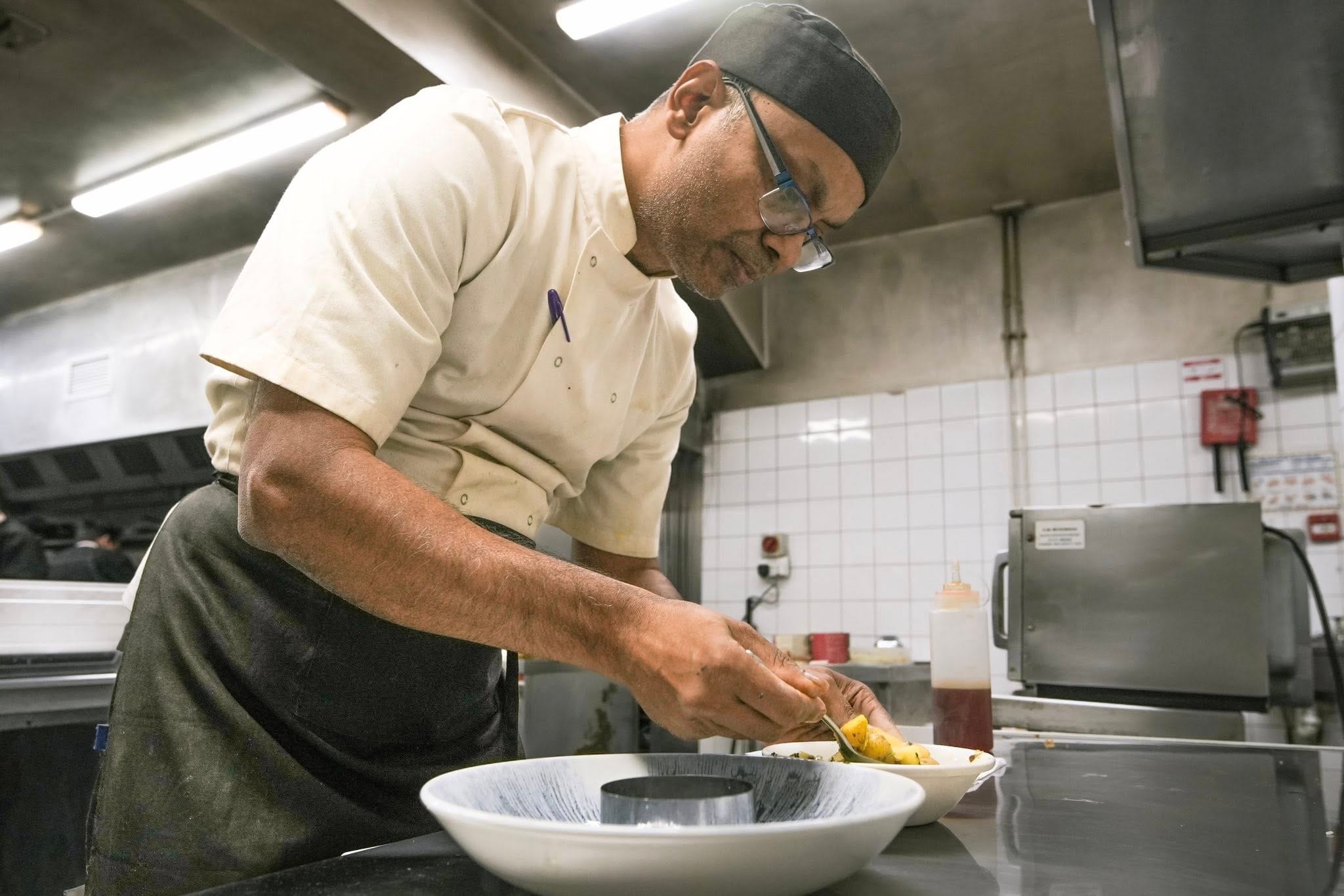
There’s often a moment in a chef’s career where cooking becomes something more than a profession. Not a single turning point, but a gradual shift. For Chef Sudha Saha, that realisation came not from awards or recognition alone, but from the deeper understanding of what food can do.
From an early age, he was drawn to the way cooking brings people together. A simple meal, prepared with care, had the ability to create comfort, celebration and connection. That early curiosity quickly developed into something more disciplined. The pace of the kitchen, the demand for precision and the constant opportunity to improve became part of the appeal.
Over time, that foundation evolved into a style that is now widely recognised. Rooted in traditional Indian cooking, but shaped by wider influences, Sudha’s approach is defined by balance. Not a departure from authenticity, but a refinement of it. Techniques may be modern, presentation more considered, but the soul of the dish remains intact.
“It’s not about reinventing Indian food for the sake of it,” he explains. “It’s about elevating it. Keeping the essence, but expressing it in a way that feels current.”
That evolution has been shaped by experience. High-pressure kitchens taught discipline and consistency. Exposure to different cuisines encouraged curiosity and creativity. Moving into leadership roles shifted the focus from individual dishes to the wider experience. Each stage added another layer to his identity as a chef.
And while that identity is now well established, it is far from fixed.
“There’s a clear signature in how I approach flavour,” he says. “But cooking never stands still. You have to keep learning, refining and evolving.”

Cooking Without Borders
Today, Sudha’s work spans multiple venues and pop-up concepts, offering a different kind of creative freedom. Rather than being tied to one kitchen, each environment presents a new opportunity.
“What I enjoy most is the variety. Every space, every audience, every setup is different. It pushes you to adapt and think in new ways.”
That flexibility also allows for experimentation. Pop-ups in particular create space to test ideas, respond to different audiences and evolve dishes in real time. But behind that freedom is a more complex reality.
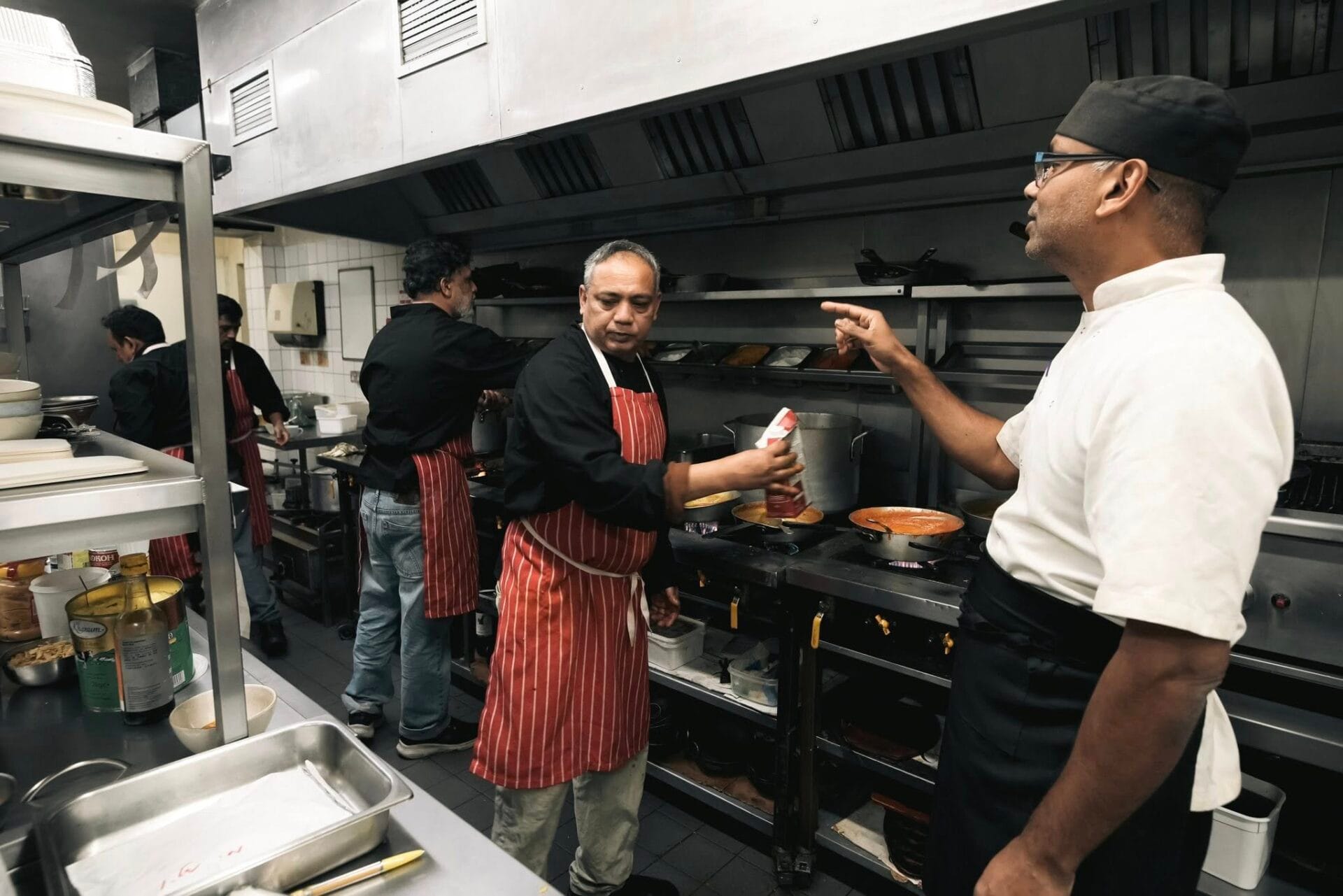
Working in unfamiliar kitchens, adapting to different equipment and managing logistics requires a level of precision that often goes unseen. Much of the work is done in advance, with meticulous preparation and planning needed to ensure consistency on the day.
“It might look effortless from the outside, but it’s anything but. You’re constantly adapting. You have to simplify, stay focused and rely on your team.”
When stepping into a new venue, his process is both instinctive and considered. The first focus is always the identity of the space.
“What is the atmosphere? Who are the guests? What experience does the venue naturally lend itself to?”
From there, the practical realities come into play. The kitchen, the team and the resources available all shape what is possible. The goal is always the same. To create something that feels natural to the setting, but still carries a clear point of view.
Today, that approach can be experienced locally too. Sudha is currently working across a number of venues and collaborations, including Spice Fusion in Dunhampton in Stourport-on-Severn, where his influence is beginning to shape a new direction for the menu. Drawing on his experience across India’s diverse regions, from the depth of northern curries to the vibrancy of coastal seafood, his cooking brings a broader perspective to the kitchen. It’s a reflection of everything discussed here. A balance of tradition, technique and evolution, now expressed on the plate in a more immediate and accessible way.

Tradition, Reimagined
At the heart of Sudha’s cooking is a careful balance between authenticity and creativity.
For him, tradition is not something to be replaced, but something to be understood. Many dishes have endured because of their balance, their technique and their cultural significance. That foundation is respected.
“If a dish already feels complete, I leave it alone. It’s about executing it at the highest level.”
But where there is space to evolve, he will explore it. Texture, presentation or technique may shift, but only if it adds something meaningful.
“You have to know the rules before you can break them. And even then, the goal is never to change something for the sake of it.”
That same philosophy extends to ingredients. While Indian cuisine is often associated with its spices, Sudha places equal importance on locality and seasonality.
“Indian cooking has always been shaped by what’s available. So using local, seasonal produce actually stays true to that philosophy.”
By pairing traditional techniques with regional ingredients, the food becomes more connected to its surroundings. It also keeps the menu in constant motion, driven by what is at its best at any given time.

Tales from the Pass
Like any kitchen, not every service goes to plan.
One early experience remains particularly memorable. A fully booked tasting menu service where everything that could go wrong, did. A missing delivery, equipment failure and a key component over-seasoned just before service.
“For a moment, it felt like everything was about to fall apart.”
But instead of panic, the team adapted. Dishes were simplified, communication sharpened and the kitchen reset itself in real time.
“What stayed with me was that the guests never saw it. In fact, they said it felt especially alive that night.”
It was a reminder that perfection in hospitality is not about avoiding problems, but about how you respond to them.
Other lessons have come more quietly. A dish that initially failed because it was overcomplicated, only to become something stronger when stripped back. A guest reacting emotionally to a dish that triggered an unexpected memory.
“We focus so much on technique and precision, but food can connect with people in ways you don’t always anticipate.”
And then there are the moments only chefs truly understand. The feeling of a service that is just on the edge. Everything under control, but only just. The entire team moving in sync, aware that one mistake could tip the balance.
“It’s controlled chaos. And when you come through it cleanly, there’s a satisfaction that’s hard to describe.”

The Reality Behind the Plate
Despite the creativity and recognition, the reality of this level of cooking remains demanding.
For Sudha, the motivation lies in the pursuit itself.
“There is always something more to learn. A new technique, a different ingredient, a better way to execute something.”
At the same time, the creative side allows for storytelling. Each dish is an opportunity to evoke a reaction, to create something memorable. It is that balance between discipline and creativity that keeps the process engaging.
He is also keen to challenge common perceptions of Indian cuisine.
“At this level, it’s not about heat or heavy sauces. It’s about balance, acidity, texture and precision.”
The timing of a spice, the way it is treated, the layering of flavours. These are the details that define the difference between something good and something exceptional.
Quickfire
One dish that defines your style?
Cured scallop with spiced buttermilk whey, curry leaf oil and radish.
Favourite ingredient right now?
Koji-aged green mango.
Most satisfying moment in service?
When the dining room falls quiet and guests are fully engaged in the experience.
Underrated flavour combination?
Black garlic and tamarind.
One thing every great dining experience should have?
A moment of genuine surprise.
One thing guests do that chefs appreciate?
Sharing a personal reaction or memory connected to a dish.
At its core, Sudha Saha’s approach to cooking is not about reinvention, but about understanding. Respecting where dishes come from, while allowing them to evolve. Balancing discipline with creativity. And creating something that connects, often in ways that go far beyond the plate.